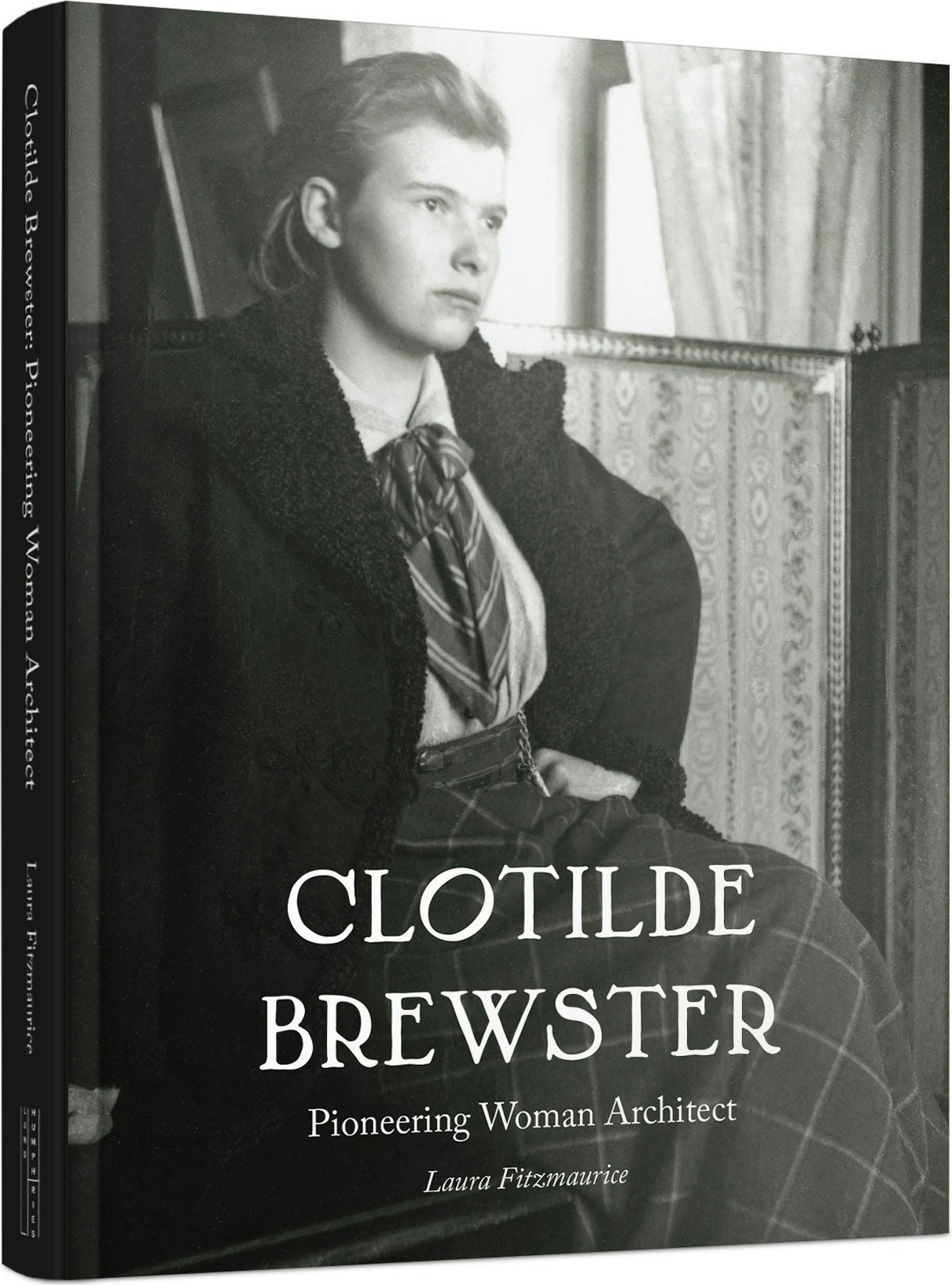
Described by composer Ethel Smyth as brilliant, sociable, amusing and utterly original, Clotilde Brewster defied all the odds by becoming the first woman to work internationally as an architect. She was part of a group of pioneering women in the late nineteenth century who broke down barriers in their chosen professions, including the Garretts: in fact, Agnes Garrett (interior decorator) and her sister Millicent Garrett-Fawcett (founder of Newnham College) guided and aided Clotilde at the start of her life and career in England. Clotilde ‘Cloto’ Brewster (1874–1937) was born in France to an expatriate American father and an aristocratic German mother. Multilingual and cosmopolitan in her ideas and actions, she spent most of her life in continental Europe before settling in Britain. Her early training was in Florence, Italy where she was mentored by architects Adolf Hildebrand and Emanuel La Roche. Aged 18, Clotilde was chosen to exhibit her work at the 1893 World’s Columbian Exhibition in Chicago and the following year, she apprenticed to the architect Reginald Blomfield in London before completing her studies at the Royal Academy of Arts. Undaunted by the difficulties she might face as a woman in a man’s profession, she relished the challenge of competing with her male peers. In 1899 she gave a speech at the International Congress of Women on the subject of architecture as a profession for women. Not content to accept the role of designer of homely interiors, Clotilde successfully pursued larger and more complex commissions. In 1901, at the age of 27, she designed what is perhaps her greatest project, the Renaissance revival-style Palazzo Soderini overlooking Piazza del Popolo in Rome. Her buildings can be found in England, France, Germany, Italy and Russia. Her commissions, built and unbuilt, include projects of urban palaces, castles, houses, fountains, mausoleums, chapels, additions and renovations. This book is the first to catalogue her work, which includes over 80 projects, and it features the previously unpublished letters she wrote throughout her life to her father and brother, which reflect her exuberant personality and keen sense of humour. It examines how her early years in Italy so crucially influenced her choice of career and follows her fascinating journey through architecture and the high-society world of her clients.
Publisher
Laura Fitzmaurice
ISBN-13
9781848226951
Subjects
Hardcoverbic AMB: Individual architects & architectural firmscontributor:Laura Fitzmauriceformat:Hardcoverimprint:Lund Humphries Publishers Ltdprice:45.00publication-date:2024-11-20publisher:Lund Humphries Publishers Ltdseries:Architectural History of the British Islestype:Nonfiction




Community Notes