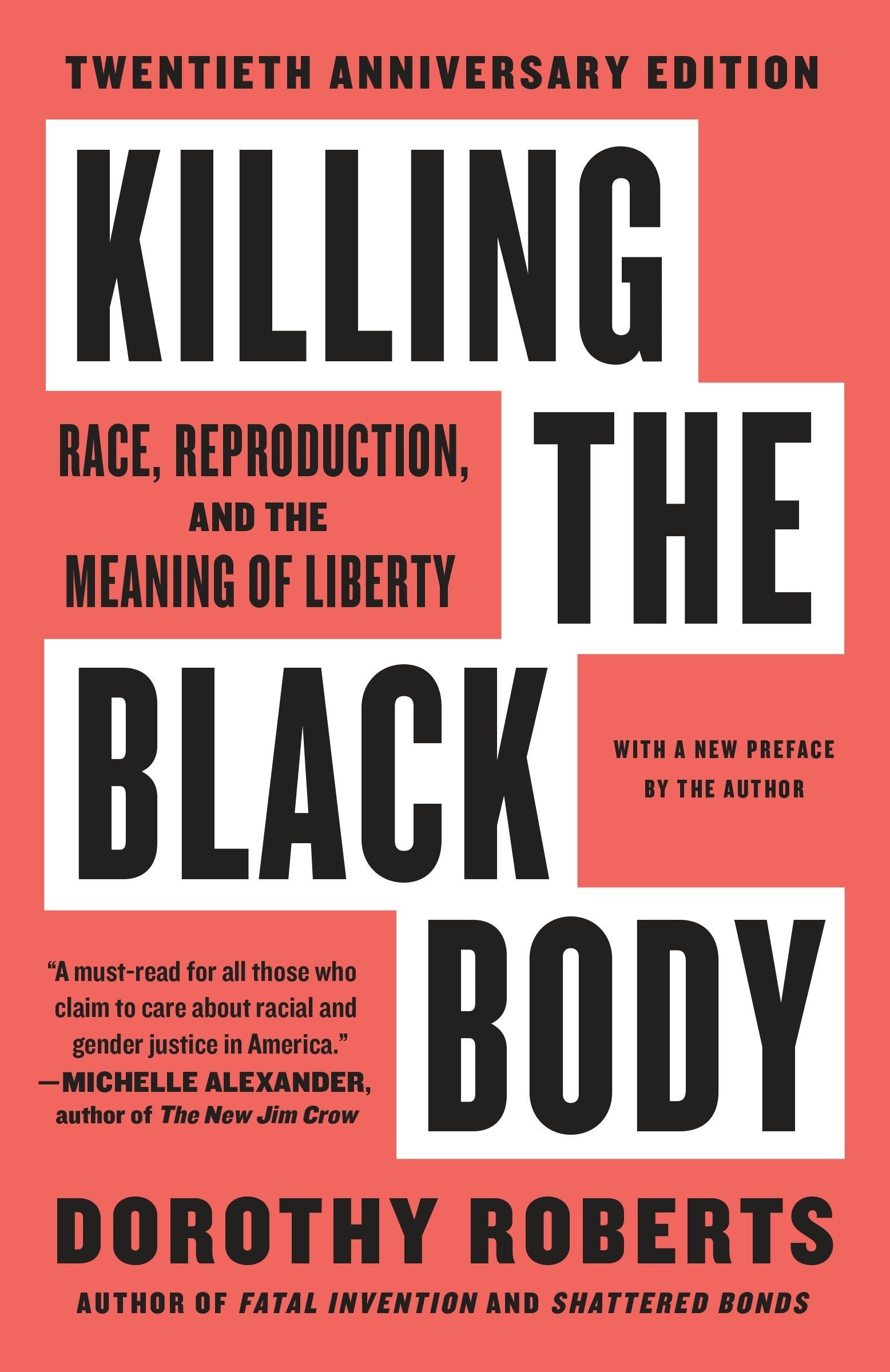
Killing the Black Body // Race, Reproduction & the Meaning of Liberty
by racially biased images of welfare queens and crack babies
In 1997, this groundbreaking book made a powerful entrance into the national conversation on race. In a media landscape dominated by racially biased images of welfare queens and crack babies, Killing the Black Body exposed America’s systemic abuse of Black women’s bodies. From slave masters’ economic stake in bonded women’s fertility to government programs that coerced thousands of poor Black women into being sterilized as late as the 1970s, these abuses pointed to the degradation of Black motherhood—and the exclusion of Black women’s reproductive needs in mainstream feminist and civil rights agendas. Now, some two decades later, Killing the Black Body has not only exerted profound influence, but also remains as crucial as ever—a rallying cry for education, awareness, and action on extending reproductive justice to all women. This is a no-holds-barred response to the liberal and conservative retreat from an assertive, activist, and socially transformative civil rights agenda of recent years--using a Black feminist lens and the issue of the impact of recent legislation, social policy, and welfare "reform" on Black women's--especially poor black women's--control over their bodies' autonomy and their freedom to bear and raise children with respect and dignity in a society whose white mainstream is determined to demonize, even criminalize their lives. It gives its readers a cogent legal and historical argument for a radically new, and socially transformative, definition of "liberty" and "equality" for the American polity from a Black feminist perspective. The author is able to combine the most innovative and radical thinking on several fronts—racial theory, feminist, and legal—to produce a work that is at once history and political treatise. By using the history of how American law—beginning with slavery—has treated the issue of the state's right to interfere with the Black woman's body, the author explosively and effectively makes the case for the legal redress to the racist implications of current policy with regards to 1) access to and coercive dispensing of birth control to poor Black women 2) the criminalization of parenting by poor Black women who have used drugs 3) the stigmatization and devaluation of poor Black mothers under the new welfare provisions, and 4) the differential access to and disproportionate spending of social resources on the new reproductive technologies used by wealthy white couples to insure genetically related offspring. The legal redress of the racism inherent in current American law and policy in these matters, the author argues in her last chapter, demands and should lead us to adopt a new standard and definition of the liberal theory of "liberty" and "equality" based on the need for, and the positive role of government in fostering, social as well as individual justice. Paperback: 400 pages Publisher: Vintage (December 29, 1998) Language: English ISBN-10: 0679758690 ISBN-13: 9780679758693 UNSPSC Code: 55101500 Product Dimensions: 5.2 x 0.9 x 8 inches Shipping Weight: 10.4 ounces
Publisher
Dorothy Roberts
ISBN-13
9780679758693
ISBN-10
0679758690
Subjects
Book(Vintage/PRH)feminismhistorymedicalnon-fictionNoname's Book Clubracismtheoryweathering
A Little Devil in America // In Praise of Black Performance
by these few words
Men Photographing Women in the 70s
by Michael Abramson
Portrait of Britain Vol 2
by Ekow Eshun A new volume featuring 200 of the most compelling portraits taken in Britain during this time of national soul
Gathering Moss // A Natural and Cultural History of Mosses
by Gathering Moss //
New Girl Order
by Gemma Padley
Archigram: The Book
by the space race
Jil Sander By Jil Sander
by Irma Boom—one of the world's leading book designers—in close collaboration with Jil Sander herself
Thomas Ruff
by reality
Monobloc
by many
Segantini
by light
Sir Ninian Comper: An Introduction to his Life and Work, with Complete Gazetteer
by ity on Comper
Sir Reginald Blomfield: An Edwardian Architect
by Sir Reginald Blomfield
Sense Formations: Farjadi Architects
by Sense Formations
Sue Ford – Self-Portrait With Camera (1960-2006)
by Ortolan and published by the Monash Gallery of Art (Melbourne)
Arup Associates: Selected and Current Works
by Arup Associates
Non-Fictional Narratives: Denton Corker Marshall
by minimalism and as cool as it is unusual
Iconic Auböck : A Workshop Shapes Austria’s Concept of Design
by the Auböck workshop
Max Dudler Energy Buildings
by Max Dudler Energy
Drew Pettifer – I Keep Mine Hidden
by Drew Pettifer -
Hoda Afshar – The Fold
by Iranian artist Hoda Afshar takes as its starting point the vast archive of Gaëtan Gatian de Clérambault (1872–1934)
Yankee Modern: The Houses of Estes/Twombly
by William Morgan’s opening essay traces the firm’s development and situates their work in both regional and historical cont
Nigel Shafran – The Well
by Linda van Deursen
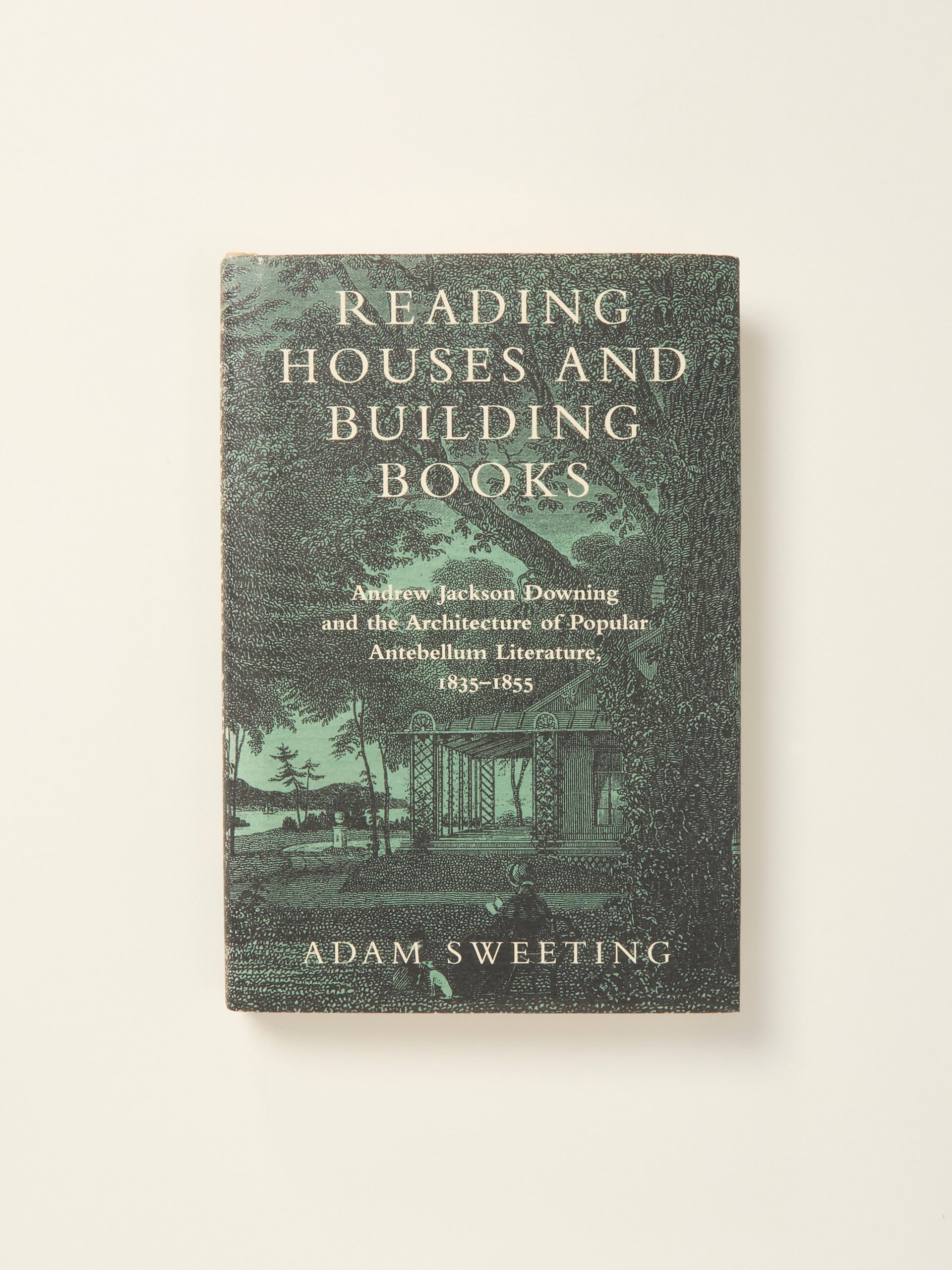
Reading Houses and Building Books: Andrew Jackson Downing and the Architecture of Popular Antebellum Literature, 1835–1855
by spread far beyond his native Hudson River Valley during the first half of the 19th century
Thomas Prior – Slip Me the Master Key
by Thomas Prior collecting together two decades of the American artist’s precise and unflinching photographic practice
Kashef Chowdhury: The Friendship Centre – Gaibandha, Bangladesh
by Dhaka-based architect Kashef Chowdhury
Achille Castiglioni, Franco Sbarro: Esperienze di architettura : generazioni a confronto (I quaderni dell’Accademia di architettura Mendrisio) (Italian Edition)
by Achille Castiglioni
JB Blunk: Fourth Edition
by Lucy Lippard
B-Architecten: X
by several incisive essays
Coelacanth Architects Jam
by Coelacanth Architects
Bernini and the Bell Towers: Architecture and Politics at the Vatican





























Community Notes