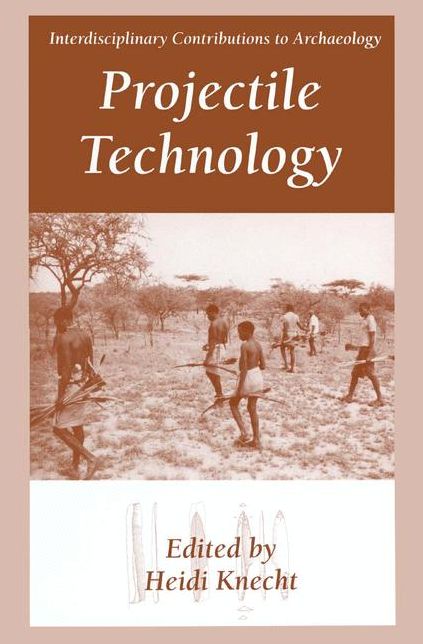
Projectile Technology
Artifacts linked to projectile technologies traditionally have provided the foundations for timespace systematics and culturalhistoric frameworks in archaeological research having to do with foragers. With the shift in archaeological research objectives to processual interpretations, projectile technolo gies continue to receive marked attention, but with an emphasis on the implications of variability in such areas as design, function, and material as they relate to the broader questions of human adaptation. The reason that this particular domain of foraging technology persists as an important focus of research, I think, comes in three parts. A projectile technology was a crucial part of most foragers' strategies for survival, it was functionally spe cific, and it generally was fabricated from durable materials likely to be detected archaeologically. Being fundamental to meat acquisition and the principal source of calo ries, projectile technologies were typically afforded greater timeinvestment, formal modification, and elaboration of attributes than others. Moreover, such technologies tend to display greater standardization because of constraints on size, morphology, and weight that are inherent to the delivery system. The elaboration of attributes and standardization of form gives projectile technologies timeand spacesensitivity that is greater than most other foraging technologies. And such sensitivity is immensely valuable in archaeological research.
Publisher
Springer US
Publication year
1997
ISBN-13
9780306457166
ISBN-10
1145176321
- Have:1
- Want:—
- Avg Rating:—
- Ratings:—

Community Notes