This website uses cookies.
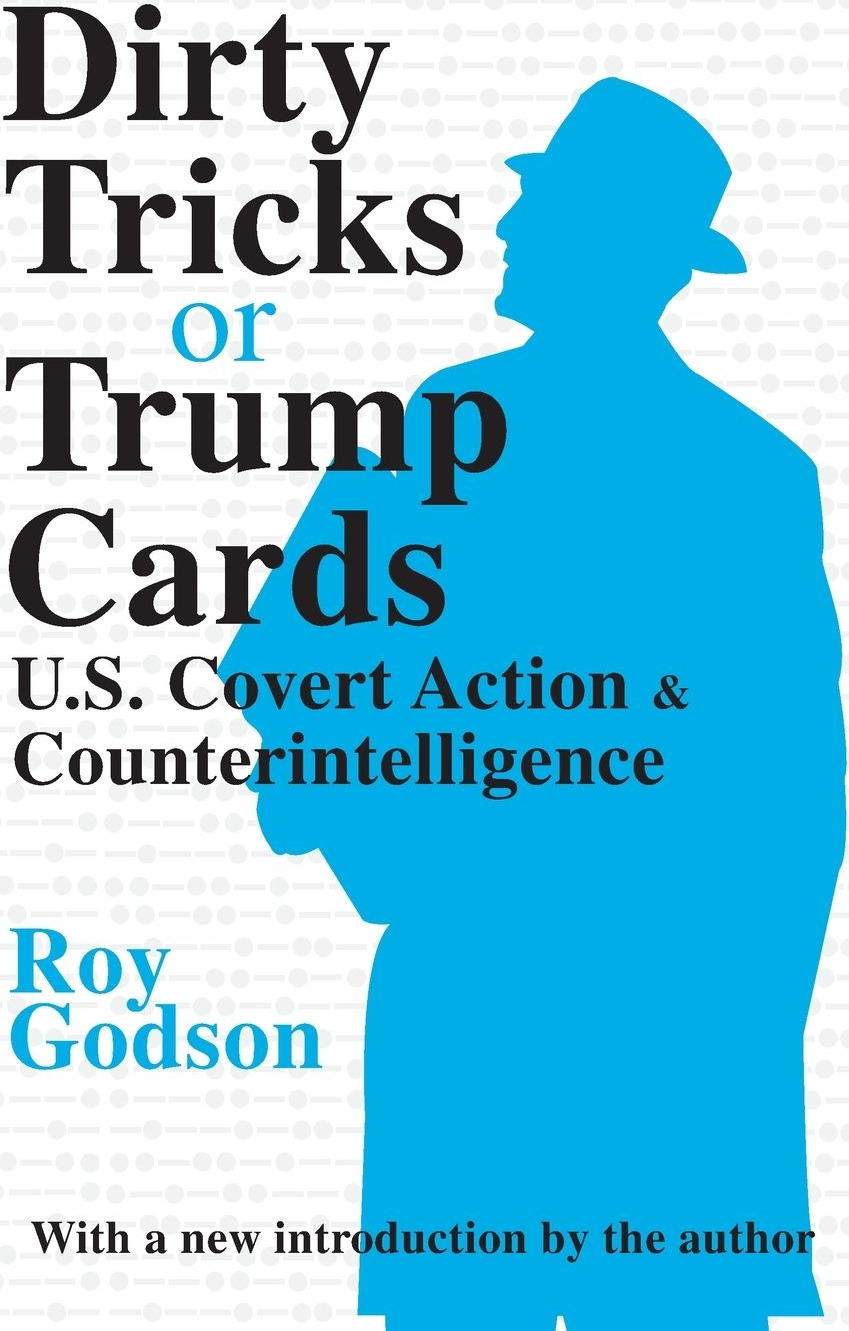
Dirty Tricks or Trump Cards: U.S. Covert Action and Counterintelligence cover

Dirty Tricks or Trump Cards: U.S. Covert Action and Counterintelligence

by

Contrary to popular misconceptions and public branding as "dirty tricks," covert action and counterintelligence can have considerable value. Democracies, while wary of these instruments, have benefited significantly from their use, saving lives, treasure, and gaining strategic advantage. As liberal democracies confront the post-Cold War mix of rogue states and non-state actors, such as criminals and terrorists, and weapons of mass destruction and mass disruption, these clandestine arts may prove to be important tools of statecraft, and perhaps trump cards in the twenty-first century.Godson defines covert action as influencing events in other parts of the world without attribution, and counterintelligence as identifying, neutralizing, and exploiting the secret activities of others. Together they provide the capability to resist manipulation and control others to advantage. Counterintelligence protects U.S. military, technological, and diplomatic secrets and turns adversary intelligence to U.S. advantage. Covert action enables the United States to weaken adversaries and to assist allies who may be hampered by open acknowledgment of foreign support.Drawing on contemporary and historical literature, broad-ranging contacts with senior intelligence officials in many countries, as well as his own research and experience as a longtime consultant to the U.S. government, Godson traces the history of U.S. covert action and counterintelligence since 1945, showing that covert action works well when it is part of a well-coordinated policy and when policy makers are committed to succeeding in the long-term. Godson argues that the best counterintelligence is an offensive defense. His exposition of the essential theoretical foundations of both covert action and counterintelligence, supported by historical examples, lays out the ideal conditions for their use, as well as demonstrating why they are so difficult to attain.This book will be of interest to students and general readers interested in political science, national security, foreign policy, and military policy.
Publisher
Transaction Publishers
Publication year
1995
ISBN-13
9780765806994
ISBN-10
1765177995
Pages
256
Language
English
Subjects
Covert OperationsCounterintelligenceCold WarNational SecurityEspionageIntelligence StudiesPolitical Science

  • Have:1
  • Want:
  • Avg Rating:
  • Ratings:

Who has this book

1 Connection

Recommendations

Working with Multimodality
by Gunther Kress
Printing Propaganda and Martin Luther King
by David D. Henige
Chatter: The Voice in Our Head, Why It Matters, and How to Harness It
by Ethan Kross
General and Synthetic Methods
by G. Pattenden
Men Who Hate Women
Men Who Hate Women
by Laura Bates
The Devil’s Chessboard: Allen Dulles, the CIA, and the Rise of America’s Secret Government
by David Talbot
The Spy Who Came in from the Cold
by John le Carré
Menace to Society: Political-Criminal Collaboration Around the World
by Roy Godson
Cyclops
Cyclops
by Clive Cussler
Sahara
Sahara
by Clive Cussler
The Shape of the Future: World Politics in a New Century
by Donald M. Snow
Louis D. Brandeis: American Prophet
by Jeffrey Rosen
Alexandra Kollontai: Finland and Socialism
by Author Unknown
The Blonde Identity
The Blonde Identity
by Ally Carter
Building Security in the New States of Eurasia: Subregional Cooperation in the Former Soviet Space
by EastWest Institute (New York
Internal Colonialism: The Celtic Fringe in British National Development
by Michael Hechter
Wilson and China: A Revised History of the Shandong Question
by Bruce A. Elleman
Identity Crisis: The 2016 Presidential Campaign and the Battle for the Meaning of America
by John Sides
The Coddling of the American Mind: How Good Intentions and Bad Ideas Are Setting Up a Generation for Failure
by Greg Lukianoff and Jonathan Haidt
How States Think
How States Think
by John J. Mearsheimer
The Day After Roswell
by Philip J. Corso
The Night of Wenceslas
by Lionel Davidson
The Last Thing He Wanted
by Joan Didion
Collapse
Collapse
by Vladislav M. Zubok
Last Best Hope: America in Crisis and Renewal
by George Packer
The Reverse of the Medal
by Patrick O'Brian
George F. Kennan: An American Life
by John Lewis Gaddis
The Gulag Archipelago, Volume 3
by Aleksandr I. Solzhenitsyn
Without Remorse
Without Remorse
by Tom Clancy
Korean Attitudes Toward the United States: Changing Dynamics
by David I. Steinberg

Market

Community Notes