This website uses cookies.
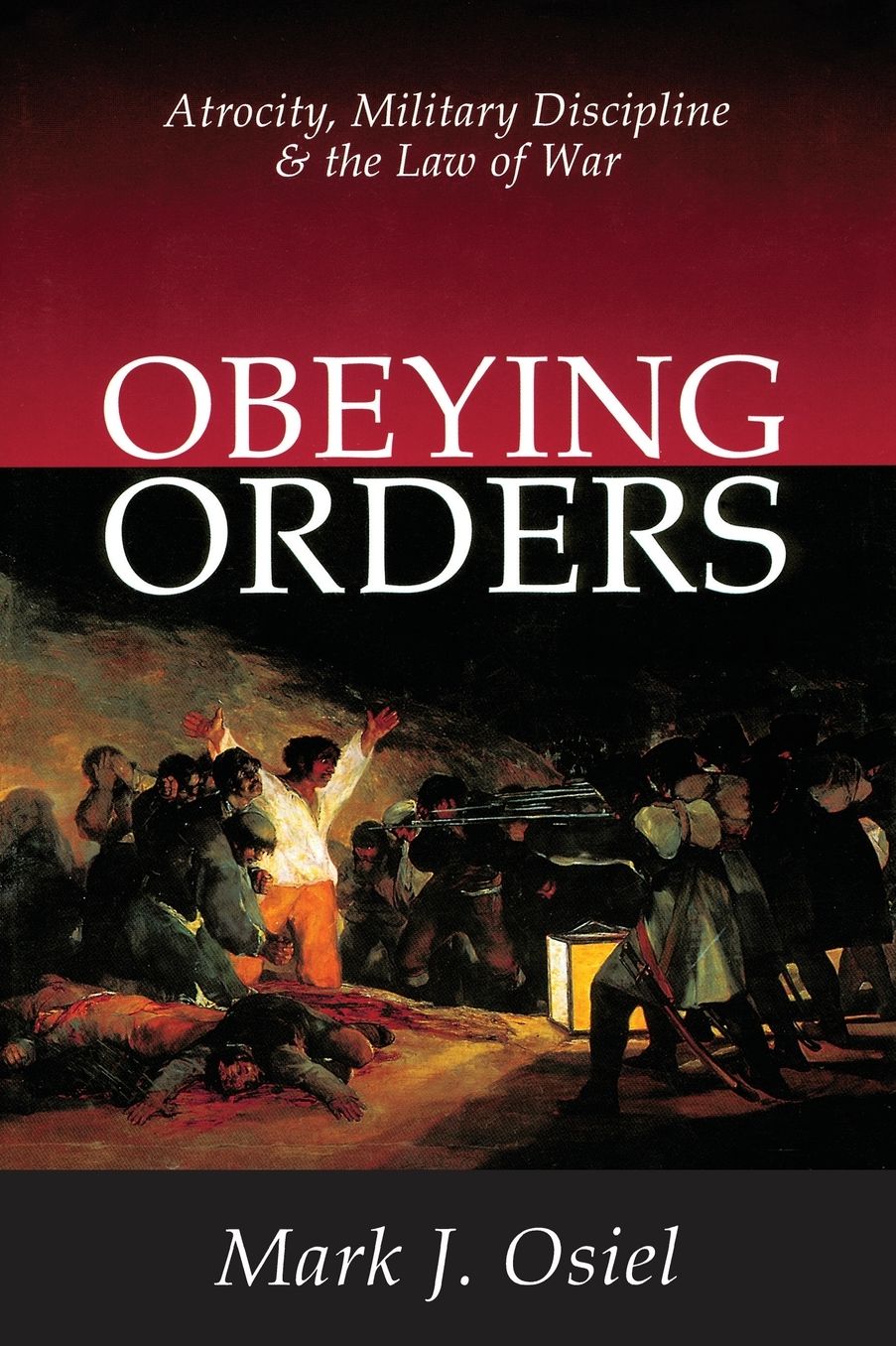
Obeying Orders: Atrocity, Military Discipline and the Law of War cover

Obeying Orders: Atrocity, Military Discipline and the Law of War

by

A soldier obeys illegal orders, thinking them lawful. When should we excuse his misconduct as based in reasonable error? How can courts convincingly convict the soldier's superior officer when, after Nuremberg, criminal orders are expressed through winks and nods, hints and insinuations? Can our notions of the soldier's "due obedience," designed for the Roman legionnaire, be brought into closer harmony with current understandings of military conflict in the contemporary world? Mark J. Osiel answers these questions in light of new learning about atrocity and combat cohesion, as well as changes in warfare and the nature of military conflict. Sources of atrocity are far more varied than current law assumes, and such variations display consistent patterns. The law now generally requires that soldiers resolve all doubts about the legality of a superior's order in favor of obedience. It excuses compliance with an illegal order unless the illegality - as with flagrant atrocities - would be immediately obvious to anyone. But these criteria are often in conflict and at odds with the law's underlying principles and policies. Combat and peace operations now depend more on tactical imagination, self-discipline, and loyalty to immediate comrades than on immediate, unreflective adherence to the letter of superiors' orders, backed by threat of formal punishment. The objective of military law is to encourage deliberative judgment. This can be done, Osiel suggests, in ways that enhance the accountability of our military forces, in both peace operations and more traditional conflicts, while maintaining their effectiveness. Osiel seeks to "civilianize" military law while building on soldiers' own internal ideals of professional virtuousness. He returns to the ancient ideal of martial honor, reinterpreting it in light of new conditions, arguing that it should be implemented through realistic training in which legal counsel plays an enlarged role rather than by threat of legal prosecution. Obeying Orders thus offers a compelling answer to the question that has most haunted the moral imagination of the late twentieth century: the roots - and restraint - of mass atrocity in war.
Publisher
Transaction Publishers
Publication year
1999
ISBN-13
9780765807984
ISBN-10
1765177529
Pages
408
Language
English
Subjects
Military LawWar CrimesLegal TheoryMilitary EthicsInternational LawHuman Rights

  • Have:1
  • Want:
  • Avg Rating:
  • Ratings:

Who has this book

1 Connection

Recommendations

Working with Multimodality
by Gunther Kress
Printing Propaganda and Martin Luther King
by David D. Henige
Chatter: The Voice in Our Head, Why It Matters, and How to Harness It
by Ethan Kross
General and Synthetic Methods
by G. Pattenden
Men Who Hate Women
Men Who Hate Women
by Laura Bates
The International Law of Human Rights and States of Exception
by Anna-Lena Svensson-McCarthy
Land of Tears
Land of Tears
by Robert Harms
Condition Critical: Life and Death in Israel/Palestine
by Alice Rothchild
Displaced
Displaced
by Pico Iyer
Palestine Speaks: Narratives of Life Under Occupation
by Mateo Hoke & Cate Malek
Legitimacy and History
by Paul W. Kahn
The Colors We Share
The Colors We Share
by Angélica Dass
Senselessness
Senselessness
by Horacio Castellanos Moya
Das Bild der Menschenrechte
by Walter Kälin
The Guest Worker Question in Postwar Germany
by Rita Chin
The Ukrainian Night: An Intimate History of Revolution
by Marci Shore
Shilpa Gupta
Shilpa Gupta
by Sunil Khilnani
Prisons
Prisons
by Sébastien Van Malleghem
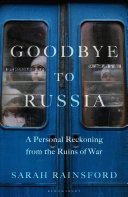
Goodbye to Russia
Goodbye to Russia
by Sarah Rainsford
A Death in Malta
A Death in Malta
by Paul Caruana Galizia
Some People Need Killing
by Patricia Evangelista
The Slave Trade (History Files)
by James Walvin
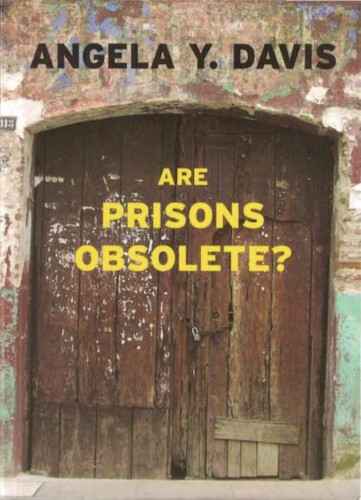
Are Prisons Obsolete?
by Angela Y. Davis
Juvenile in Justice
Juvenile in Justice
by Richard Ross
Twelve Years a Slave
by Solomon Northup
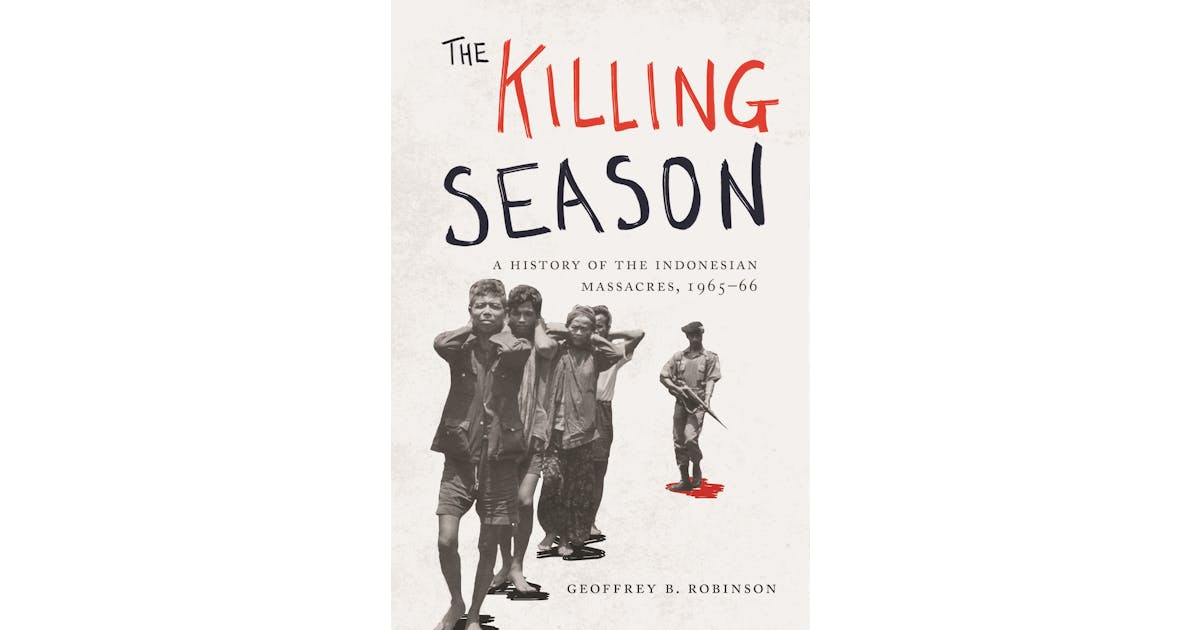
The Killing Season: A History of the Indonesian Massacres, 1965-66
by Geoffrey Robinson
Hiroshima
Hiroshima
by John Hersey
The Gulag Archipelago
by Aleksandr I. Solzhenitsyn
Control Order House
Control Order House
by Edmund Clark
The Life of Olaudah Equiano, or Gustavus Vassa, the African
by Olaudah Equiano

Market

Community Notes